F m(add9), as the Armonía Takes It
The grip Guitar uses for F m(add9), and the job it is doing while the chord sounds.
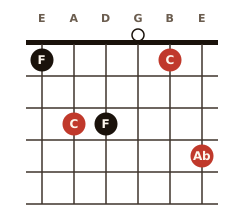
F m(add9) spells F – G – Ab – C. Which of those tones reach the air, and in what register, is decided by the section holding them — so the grip below is the answer for one instrument in one section, not a universal fingering.
Inside the armonía this instrument is the bottom of the armonía — the same mánico the vihuela is playing, an octave lower and with more sustain, which is what stops the section sounding thin under a full melody. Nothing here is a solo grip: the value of the shape is that it lines up with the vihuela's, so the pair arrive in unison as one attack with a low half and a high half.
Every shape is drawn for E–A–D–G–B–E across 6 strings, open positions first and movable ones after them, each with playback.